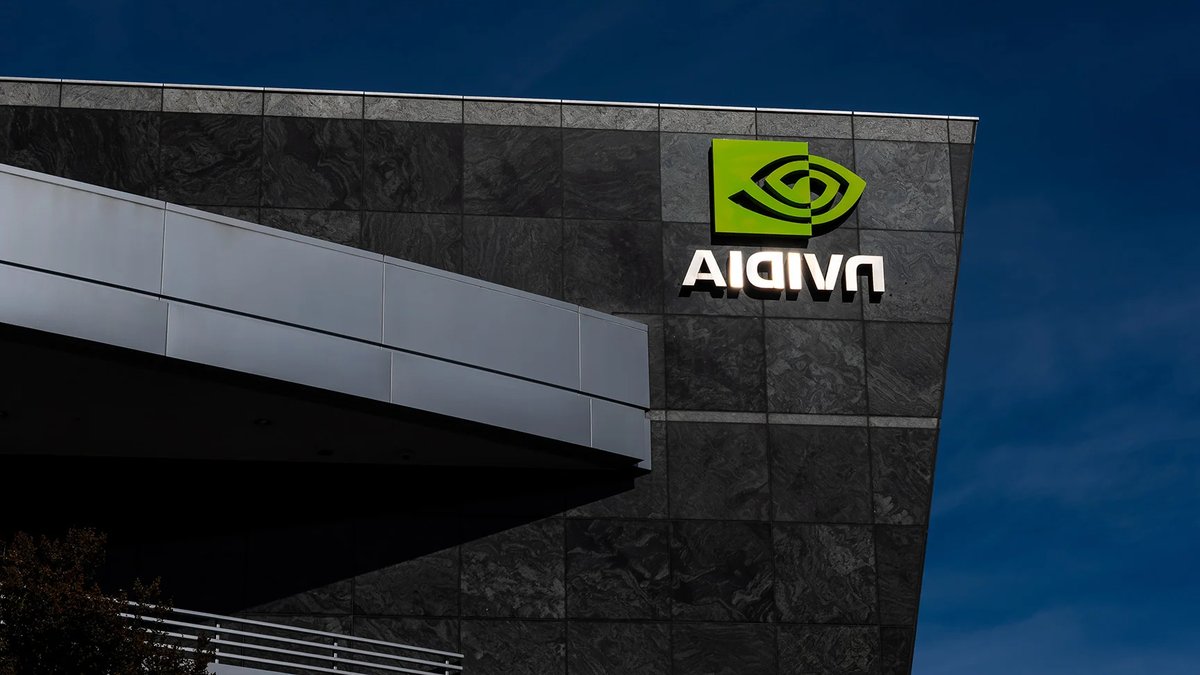
Nvidia, one of the most valuable companies in the world, is at the center of various news stories, including AI stock pricing and corporate scandals. To properly pronounce the company’s name, a simple mnemonic device can be used: pronounce Nvidia like the word “envy.” Jensen Huang, the Nvidia co-founder and CEO who recently confirmed he was having an extramarital affair with a suspected Chinese spy, joined the podcast How I Built This with Guy Raz back in May. Over the course of the hourlong podcast, Raz casually mentioned that Nvidia “comes from the Latin word [for] ‘envy,’ invidia.” Huang agreed.
The podcast wasn’t the first mention of this rather prescient cue. Huang told Fortune back in 2017 that the company didn’t even have a name at its start in the early ’90s. Huang and co-founders Chris Malacowsky and Curtis Priem named all of their company files “NV,” for “next version.” Once the company had to incorporate, the three considered various options for company names that contained those letters, and ultimately settled on a version of the word invidia. Sure enough, the company would someday become the envy of its peers in tech.
Nvidia’s History
Nvidia was founded in the early 1990s by Huang, Chris Malacowsky, and Curtis Priem. The company’s early vision was to bring 3D graphics to gaming, and in 1999, Nvidia invented the modern, single-chip graphics processing unit, or GPU. This innovation had far-reaching implications, positioning Nvidia as an early mover in AI as early as 2012. The company’s market cap surged past $3.3 trillion in 2024, making it the world’s most valuable company for the first time.
Recent Developments
However, Nvidia has lost close to 26 percent of its value since its shares hit a historic high on October 6. The selloff was triggered by macro-economic headwinds and concerns about investment and returns in the AI sector.
Read Also: PwC Trains Staff to Verify AI Outputs
A report by The New York Times about Huang’s affair with an alleged Chinese spy, Alice Huang, also contributed to the decline. Subsequent reporting linked the relationship to the movement of $7.5 billion worth of Nvidia chips through Chinese companies, raising national security concerns. U.S. policy limits the export of advanced semiconductor equipment to Chinese firms, a rule that intensified scrutiny of the massive chip flow mentioned in the reports.
Huang has admitted to the affair and apologized to his family and employees. Nvidia’s board initiated an independent investigation, announcing that it “has no reason to believe that either national security or NVIDIA secrets were compromised.”
Despite the controversy, Nvidia remains a significant player in the tech industry, with a market cap that has fluctuated between $3 trillion and $5 trillion. The company’s high-performance chips continue to drive demand, particularly in the AI sector. In addition, Nvidia earned the distinction of being the first publicly traded company to reach a $4 trillion market cap and later the first to break the $5 trillion threshold.



Leave a Reply