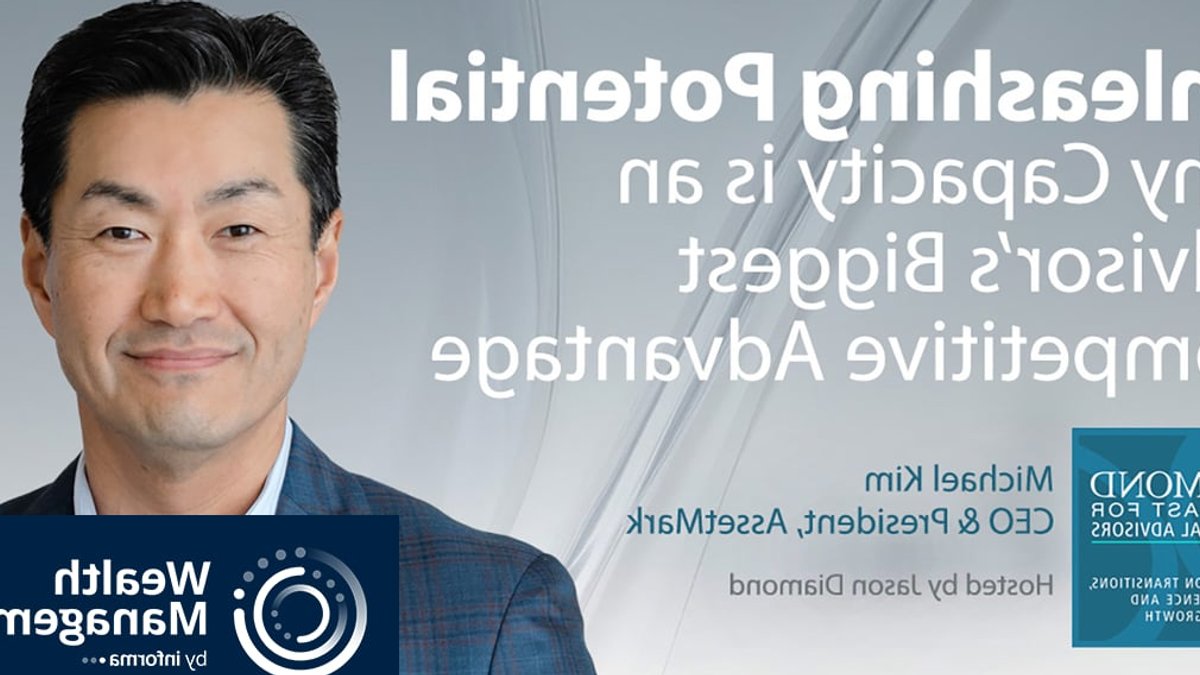
Wealth management firms are expanding, but the most significant obstacle they face is not a shortage of capital or clients—it is the limited time advisors have to dedicate to them. Michael Kim, CEO of AssetMark, explains that the most effective firms do not prioritize chasing assets or making acquisitions. Instead, they concentrate on advisor capacity, determining how to allocate time, delegate tasks, outsource responsibilities, or implement automation.
Kim’s insights stem from his work with over 12,000 independent financial advisors. He insists that organic growth, defined by consistent client retention and revenue growth, depends on advisors focusing on high-value activities. Modern clients no longer accept basic portfolio management; they expect full guidance on tax strategies, estate planning, and wealth transfer. Providing this level of service demands freeing up time, and AssetMark’s research confirms that outsourcing can recover nine hours per week, equivalent to an additional full workday, for advisors who adopt it.
Technology, particularly artificial intelligence, plays a key role in addressing this challenge. AssetMark’s Talk Tracks tool, for instance, uses AI to generate tailored talking points and planning suggestions before client meetings. Kim warns, however, that AI should not eliminate the human element. As clients gain more information through AI-driven resources, the advisor’s role as a trusted, personalized advisor becomes even more essential.
Advisors today must juggle dual responsibilities: serving as wealth counselors and managing their own businesses. Scaling an advisory practice requires deliberate decisions about technology adoption, outsourcing, and talent development. The firms that achieve long-term success are those that treat growth as a structured strategy rather than a random outcome. Kim’s core argument is straightforward: Advisors can undertake almost any task, but they cannot excel at everything. Lasting growth begins with prioritizing what truly drives value.
AssetMark’s data reinforces this transition. Advisors who outsource non-core functions report improved productivity and stronger client outcomes. However, the difficulty lies in integrating these tools without sacrificing the personal connection clients increasingly seek. Kim’s recommendation is direct: Advisors must identify where they deliver the most value and then structure their businesses around those areas. The risk of spreading resources too thin leads only to stagnation.




Leave a Reply