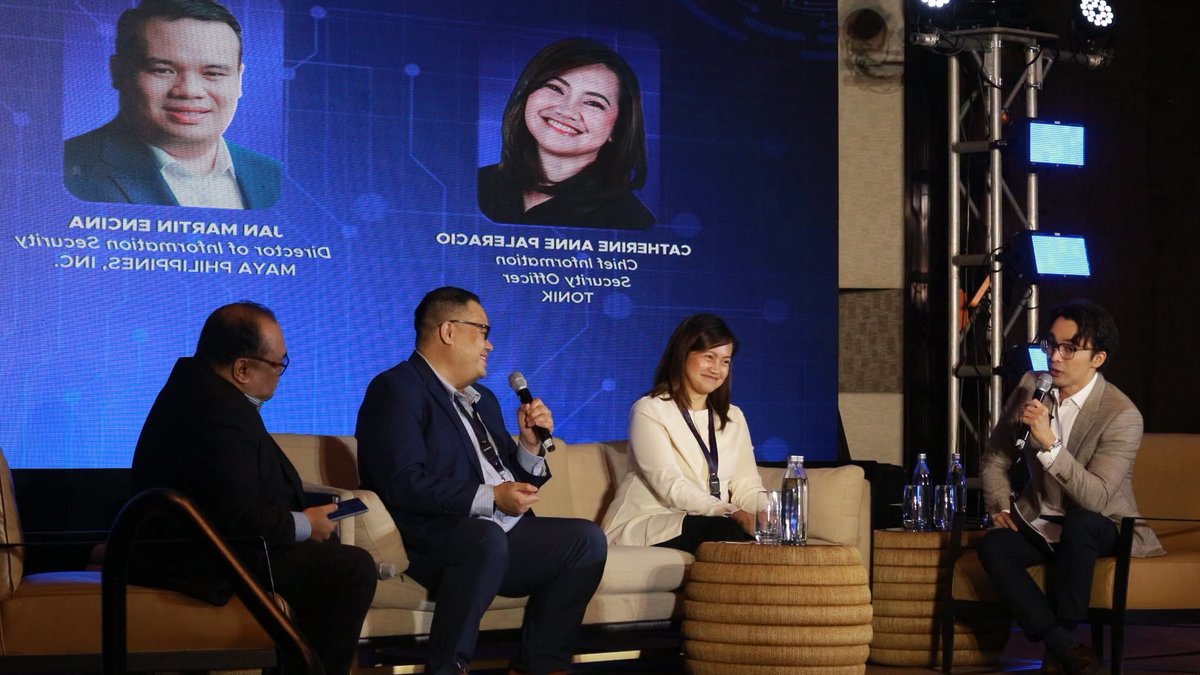
Ransomware, phishing, and AI-enabled attacks rank as the leading cybersecurity threats for the country’s largest e-wallet platforms, Maya and GCash. Executives from both companies discussed these risks at a recent industry summit.
Persistent threats target consumers and employees
Jan Martin Encina, Maya Philippines’ information security director, stated that account takeovers and phishing attempts pose ongoing risks for customers and staff. Financial services, he explained, have always attracted fraudsters.
“Threats often target our consumers to extract information or hijack accounts, turning them into fraud victims,” Encina said during an interview at the BusinessWorld Cybersecurity Summit in Pasay City. “Employees at financial services firms like ours also face phishing attempts aimed at stealing passwords and identities.”
Such attacks continue at a steady pace.
AI increases attack scale and sophistication
Both companies identified AI as a rising threat, especially in social engineering schemes. Ingrid Rose Ann Beroña, GCash’s chief risk officer, noted that AI-powered manipulation makes attacks more persuasive and difficult to spot.
“AI use in social engineering is a growing cyber threat because it doesn’t directly breach systems but manipulates consumers, which can later compromise technology and business operations,” she said.
Related: OFWs and BPO workers face high disruption risk
Encina agreed, pointing out that AI enables attackers to expand their reach. “AI lets criminals scale attacks from a handful of victims to thousands. It also improves phishing emails by eliminating grammatical errors,” he said.
A report from a global cybersecurity firm predicted that by 2026, autonomous AI systems could launch attacks independently—stealing data, deploying ransomware, and infiltrating networks. The global cost of cybercrime is expected to surpass $23 trillion by 2027 due to industrialized ransomware and automated fraud networks.
Defensive AI and multi-layered security
Both companies now use AI in their security measures. Maya employs real-time anomaly detection, while GCash, serving over 94 million users, continually upgrades its systems with AI-driven tools from leading providers.
The financial services sector has also adopted multi-factor authentication and biometric verification. Encina mentioned that Maya conducts regular training to help employees identify phishing and social engineering tactics.
“GCash remains a secure platform regardless of transaction volume,” Beroña said. “We continuously seek the best technologies to match evolving threats.”