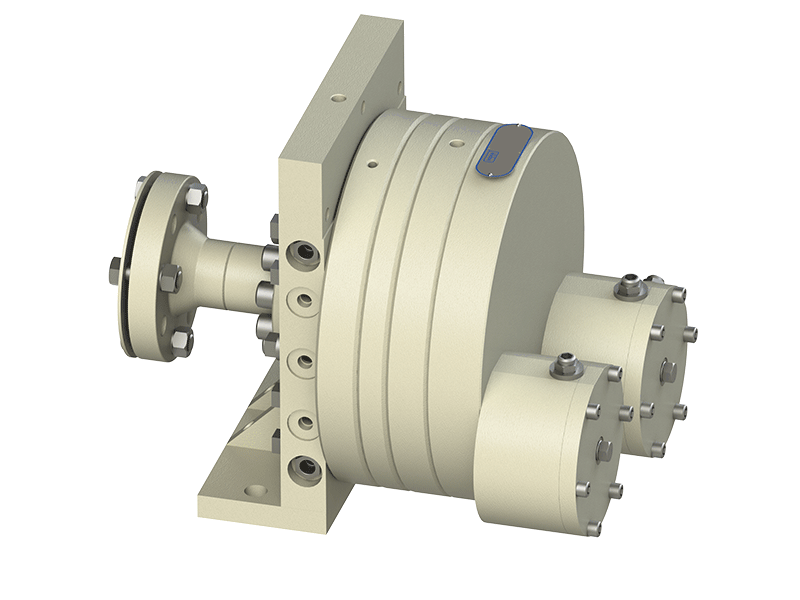
When industrial systems require consistent, reliable fluid transfer, technicians often turn to a rotary gear pump. These devices are common in various settings, ranging from heavy manufacturing to specialized lubrication systems, precisely because they offer a predictable way to move liquids under pressure. However, while their design is relatively simple, the way they function—and the way they can fail if misused—requires a clear understanding of their internal mechanisms.
The Mechanical Logic of Positive Displacement
At its simplest, an oil gear pump operates on the principle of positive displacement. Unlike centrifugal pumps, which rely on velocity to move fluids, these pumps physically trap a fixed volume of fluid between gear teeth and the pump housing. As the gears rotate and mesh, they carry this fluid from the inlet side to the outlet side.
This mechanical action creates a high level of consistency in output flow, regardless of changes in discharge pressure. Because the fluid is physically carried by the gears, these pumps are well-suited for fluids with different levels of viscosity. As the gears pull away from each other at the intake, they create a vacuum that draws fluid in; as they mesh again at the discharge, they force the fluid out into the system piping. This process is inherently robust, which is why the rotary gear pump is frequently chosen for applications where flow rate must remain steady even when system resistance varies.
Why Selection and Integration Matter
The challenge with any fluid transfer system often lies in the interaction between the pump’s design and the specific properties of the fluid it handles. Not every pump is ideal for every task, and selecting the wrong configuration can lead to premature wear or inefficient operation.
For instance, the clearance between the gears and the casing is a critical factor. If the clearances are too tight, the potential for internal friction and heat generation increases, especially when handling highly viscous oils. Conversely, if the clearances are too wide, internal slippage can occur, where fluid leaks back from the discharge side to the intake side, significantly reducing the pump’s volumetric efficiency.
When integrating an oil gear pump into a larger machine or hydraulic circuit, operators should carefully consider:
- The viscosity of the fluid at the lowest and highest expected operating temperatures.
- The level of contamination or particulates within the fluid, which can act as an abrasive against the gear surfaces.
- The required flow rate relative to the rotational speed of the pump’s drive shaft.
Factors That Shape Operational Longevity
While these pumps are designed for durability, their lifespan is rarely determined by the pump itself; it is determined by the environment in which it operates. A well-maintained rotary gear pump can provide many years of service, but performance typically degrades when certain operational thresholds are exceeded.
One of the most frequent considerations is cavitation. If the pump struggles to draw fluid in fast enough—perhaps because the inlet line is too narrow or the fluid is too thick—the resulting vacuum can cause the fluid to vaporize into bubbles. When these bubbles move into the higher-pressure zones of the gear mesh, they implode, creating localized shockwaves that can cause pitting on the gear teeth and housing. This is a common but avoidable source of damage.
Another factor is the alignment of the drive coupling. Because these pumps rely on the precise meshing of internal components, any misalignment between the motor shaft and the pump shaft introduces side-loading. Over time, this stress manifests as uneven wear on the bearings and seals, eventually leading to leaks or mechanical binding. Regular inspection of the drive alignment is a simple but highly effective way to protect the integrity of the entire assembly.
Practical Approaches for Reliable Maintenance
To keep an oil gear pump functioning at its peak, a proactive maintenance routine is generally more effective than a reactive repair strategy. Instead of waiting for a total failure, operators can adopt several habits to catch issues before they escalate.
Monitoring System Health
Begin by listening for changes in the pump’s acoustic profile. A healthy pump typically produces a consistent, low-frequency hum. High-pitched whining or erratic rattling often suggests either trapped air, cavitation, or internal wear. Additionally, monitoring the pressure gauges on both the intake and discharge sides provides insight into how hard the pump is working. If the discharge pressure is significantly higher than the system requirements, the pump may be overworking, which can contribute to shorter service intervals.
Managing Seals and Lubrication
The seals are often the first component to show signs of stress. Given that these pumps often handle pressurized fluids, even a small leak can indicate that the seal material is no longer compatible with the fluid or that the shaft has developed run-out. When performing routine maintenance, check for signs of moisture or weeping around the shaft housing. Ensure that any external lubrication points for bearings are serviced according to the manufacturer’s recommendations, as this prevents heat buildup that could migrate into the pump chamber.
Considering the Operating Environment
Environmental factors, such as ambient temperature and cleanliness, play a larger role in performance than many realize. In dusty or high-heat environments, the oil can break down more quickly, losing its lubricating properties. Furthermore, verify that the suction strainers or filters are clean. A restricted inlet is one of the most common causes of internal pump damage, as it starves the gears of fluid and forces them to work against a constant vacuum.
When in doubt, consult the documentation provided by the equipment manufacturer regarding fluid compatibility and operational limits. Asking the right questions—such as whether the current fluid viscosity is within the pump’s design range—often helps prevent problems before they impact production.
Taking a thoughtful, methodical approach to the use of an oil gear pump ensures that the equipment remains a reliable part of your operations. By focusing on the fundamentals of flow, maintaining clean fluid paths, and ensuring proper shaft alignment, you can often achieve a consistent level of performance that supports your broader mechanical goals.





Leave a Reply