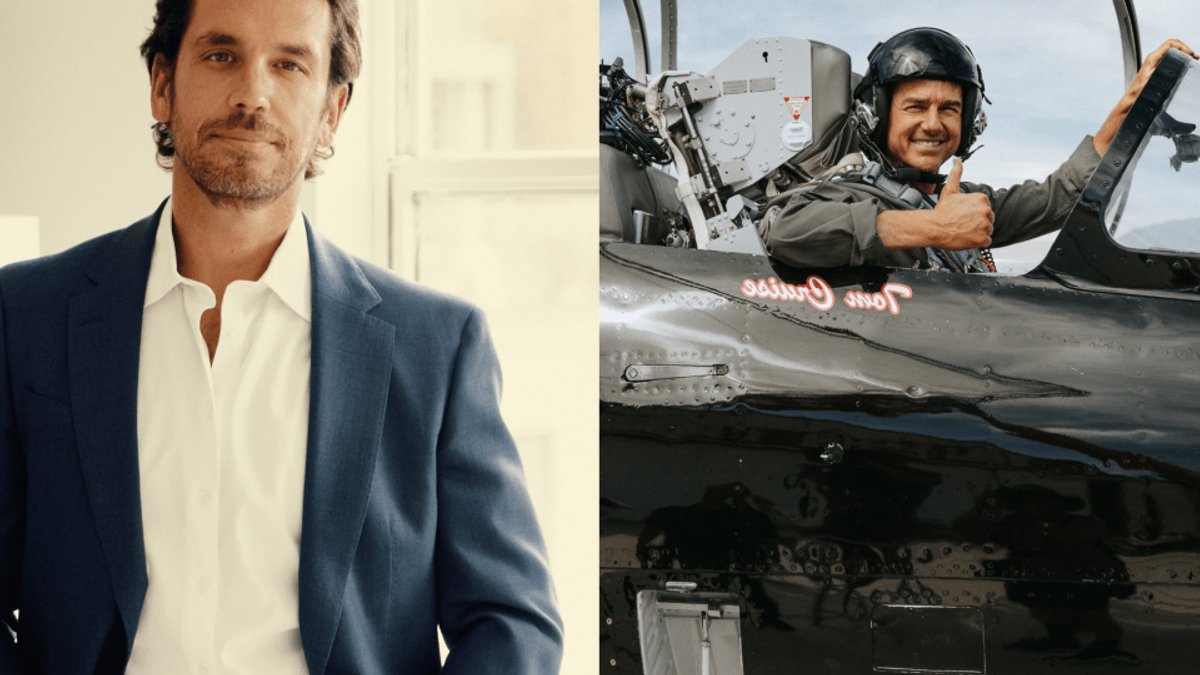
Jonathan Spano always wanted to be a Navy pilot. The U.S. military had other plans.
Spano discovered he couldn’t meet the Navy’s eyesight requirements—a fact he learned as a teenager. “I didn’t meet that criteria, so that took that off the table for me,” he told Fortune. So he did what any determined young man does when one door closes: he built his own.
Starting Small in Traffic Control
Growing up in what Spano describes as a “very blue-collar” family in California, he and his brother began doing traffic control work as teenagers—setting out cones and barricades for a crane company their father worked for. They noticed a gap in the market. “You could go to a company and rent some barricades, but they wouldn’t put them out for you,” Spano said. “Or you could go to a company, and they would get the permits, but they didn’t do the other traffic control services.”
In 1995, the brothers launched their own operation, offering traffic safety equipment—rental barricades, cones, signs, and 24/7 emergency dispatch—all under one roof. “That continued to progress and eventually turned into an office in our great-grandmother’s garage,” Spano said. “The plan was never to build a national company. It was really a way to just make some money, and it just continued to grow.”
Related: Millennials seek partners earning at least $160,000 study finds
It grew. Thirty years later, Traffic Management Inc operates across more than 50 locations in the United States. Spano says it’s the largest privately held traffic control company in the country, generating over $1 million a day in revenue.
Back to the Cockpit
The turning point came roughly two decades into running the business. Traffic Management’s finance chief suggested buying a small plane—both as a tax write-off and a more efficient way to visit the company’s growing list of locations. “It had never occurred to me that I would maybe be able to fulfill that dream as a pilot,” Spano said.
He bought a Cessna, learned to fly it, and started using it to cut down on drive time across California. That aviation investment helped the company expand from two offices to three, then ten, then twenty across the state. “Aviation was certainly a part of that success story,” Spano noted.
One plane led to another—bigger, faster, eventually a private jet, each step costing him a few hundred thousand dollars. Along the way, Spano also pursued a second passion: filmmaking. He bought a helicopter for around $2 million and partnered with Fred North, a Hollywood aerial coordinator, to mount camera rigs for film and commercial shoots.
Related: M&A insurance demand surges amid deal risks
Getting the Call for Top Gun
North floated an idea that would change everything. “They’re making another Top Gun film,” Spano recalled him saying. “You should try to modify your jet to carry the same cameras that we do on the helicopter, and if you can pull it off and get it done, you could work on and fly your airplane in this next Top Gun movie.”
Spano spent roughly 18 months and, by his own estimate, well into seven figures modifying his jet—an Embraer Phenom 300—to carry two camera systems and clear FAA certification. “We pulled it off in time to have the jet work on production and fly in the Top Gun: Maverick film,” he said. Flying alongside veteran film pilot Kevin LaRosa Jr., Spano flew “a large portion of the jet-to-jet aerial sequences, including all of the aircraft carrier sequences” in the movie.
The work earned the team a Screen Actors Guild Award for stunts. Since building the only camera jet of its kind in the world, Spano has used it on a string of other projects: commercials for private aviation companies including NetJets, FlexJet, Gulfstream, Embraer, and Delta, plus work for the U.S. Air Force. He was also part of the team behind National Geographic’s America the Beautiful, including aerial footage of the Northern Lights over Alaska, which earned an Emmy nomination.
Vital has greenlit a third Top Gun film, with production expected to begin in 2027, and Spano is already in talks with the director. “Considering we have the only platform in the world that is capable of what it is capable of,” he said, “I’m optimistic that we will be participating in that project.”
Related: Apple’s New CEO Starts Tuesday
The demand for his modified aircraft could increase if the third film follows through on plans for complex aerial sequences. Whether that actually happens depends on factors outside Spano’s control—studio budgets shift, production timelines slip—but his position as the operator of a unique piece of aviation equipment gives him a leg up if the project moves forward.
Advice From Someone Who Waited Decades
Spano’s path to the sky wasn’t quick. He squeezed flight training around a full-time job running his company. “I look back at how hard I worked to get to where I am while running a business and getting my license, and it’s not a matter of just getting your license,” he explained. “To get to where I am as an aviator, it was thousands of hours of training.”
He’d be up studying at 11 p.m. while his family was asleep and still had to get ready for work the next morning at 6 a.m. “If I had to say what one of the things that was really fundamental in me being successful was I picked the things that I wanted to achieve, and I was just fearless in pushing for them,” Spano added. “I stuck to it, I just believed that I was going to get there, and I just overcame whatever obstacle was in my way.”
His advice for anyone chasing a dream job? “Be bold, take risks, but you know also you have to put in the hard work and dedication.”




Leave a Reply